We sell online coaching, so read this knowing that. I am still going to tell you where it does not work, because a client who signs up for the wrong thing quits in six weeks and tells ten people we were a waste of money. That helps nobody.
The short answer: yes, online weight loss coaching works, and it works about as well as sitting in a room with a coach, as long as there is an actual coach involved. That last part is where most of the industry falls apart.
What the research actually says
The best evidence here is a two-year study published in the New England Journal of Medicine. Researchers followed 415 adults trying to lose weight and split them into three groups.
- Coached remotely, by phone, web and email: down about 10 pounds at the two-year mark.
- Coached in person: down about 11 pounds.
- Given the information and left to do it themselves: down under 2 pounds.
Two things jump out. The gap between remote and in person was small. The gap between being coached and being on your own was enormous, roughly five times the weight lost.
A separate 2025 trial comparing supervised training, app-guided training and a downloadable PDF plan found something similar about follow-through. People on the app-guided plan completed 81% of their workouts. People handed a PDF completed 52%. That same study found in-person supervision produced the best strength gains, which is a real point in favor of the studio and one I am not going to pretend away.
Put those together and you get the honest version: the delivery method matters less than whether a human being is paying attention to you.
What separates the online coaching that works
Not all of it is the same product. These are the four things that decide it.
A real person writes your program. It has never been easier to generate a workout plan. Ask an AI chatbot, download an app, and you have one in thirty seconds. The problem is not that the plan is bad. Most of them are fine on paper. The problem is that a plan written in thirty seconds does not know about your shoulder, your travel schedule, or the three programs you already abandoned, and it will never notice when you stop opening the app.
Someone is in contact with you between workouts. You train a few hours a week. You eat, sleep, sit and stress for the other 165. That is where weight is lost or not lost, and it is exactly the stretch where most programs go quiet.
Nutrition is part of it, not an upsell. You cannot out-train a kitchen. Any weight loss coaching that stops at the workout is only doing a third of the job.
The plan changes when your body or your life does. Every weight loss plan stalls at some point. A coach treats that as information and adjusts. An app repeats week nine at you.
Where online coaching falls short
Four situations where I would not recommend it.
You want hands-on form coaching. If you are new to lifting and want someone next to you fixing the angle of your knee mid-rep, a video demo and a form check afterward are not the same thing. Good online coaches will review video you send, and that does help. It is still not a hand on your back.
You need the appointment to make yourself go. Some people train because there is a coach in a room waiting for them at 6am, and no notification will replace that. That is not a character flaw, it is a useful thing to know about yourself.
You expect the app to supply the discipline. Online coaching removes friction, and it removes excuses. It does not do the workout. If nothing in your week will change, the program will not save you.
You are buying the cheapest option you can find. Coaching costs what a coach’s time costs. Below a certain price, the coaching part is mostly automated, and you are buying a plan with a person’s name attached to it.
What it actually costs
Prices are all over the place, so here is the honest map.
App-based programs with light human support generally run $150 to $400 a month. We laid that out in our guide to what personal training costs in Chicago. At that level you usually get a solid plan, a library of exercise videos, and messaging with someone who has a lot of clients.
One-on-one online coaching, where a specific coach writes your program and talks with you live, costs more. Ours starts at $127 a week. That is a real gap, and it is fair to ask what the extra money buys. The answer is a person’s time: someone reviewing your logs, adjusting your plan, and getting on a call with you every week.
Neither one is the right answer for everybody. Just know which of the two you are buying, because the marketing for both looks identical.
Seven questions to ask before you hire anyone
Use these on us too.
- Who writes my program, a person or software? Ask directly. The answer is usually revealing.
- Will I have one coach, or a support team? A named coach who knows your history beats a queue.
- How often will I hear from them, and how fast do they reply? Get a real answer, not “unlimited messaging.”
- Do I ever speak to my coach live? Text is cheap. A conversation is where the useful stuff comes out.
- What happens when I stall? Everyone stalls around week eight. If they have no answer, you will be the one figuring it out.
- Is nutrition included, and what does that mean? A macro target is not a plan you can live with.
- What are the terms? Month to month, or locked in? Know before you pay.
If the answers come back vague, that is your answer.
What the first 90 days should actually look like
Most people quit online coaching because of a mismatch in expectations, not because the program failed. So here is what a working setup looks like from the inside.
Weeks one and two are unglamorous. You learn the app, your coach learns you, and the numbers move less than you want. Weight jumps around for reasons that have nothing to do with fat. The useful signal at this stage is whether you are actually doing the workouts.
By week four, the plan should have changed at least once. If your program looks exactly like it did on day one, nobody is watching. That is the single clearest sign you bought a template.
Around week eight, something stalls. The scale parks, or a lift stops moving, or work eats a week. This is the moment that separates coaching from software. You should get a specific adjustment and an explanation, not encouragement.
By week twelve you should be able to point at evidence. Not just scale weight, which lies on any given morning, but a handful of things together: how your clothes fit, what you are lifting, your measurements, your energy, how often you trained. Many programs consider losing about 5% of your starting weight a meaningful result at this stage, which is the same threshold the research above used.
If you get to the end of three months and none of that has happened, and your coach has no read on why, you have learned something worth knowing. Stop paying.
About searching “online weight loss coach near me”
It is a strange search when you think about it. An online coach does not need to be in your city. But people type it anyway, and I understand why. What they usually want is a real business with a real address and real reviews, rather than a logo and a payment page.
That instinct is a good one. A coach who also runs a studio has clients they see in person every week, a reputation in a neighborhood, and a name on the door. Those are the things that make someone answer your message on a Sunday.
How we run online coaching
Our online training program is built to solve the problems above rather than dress them up.
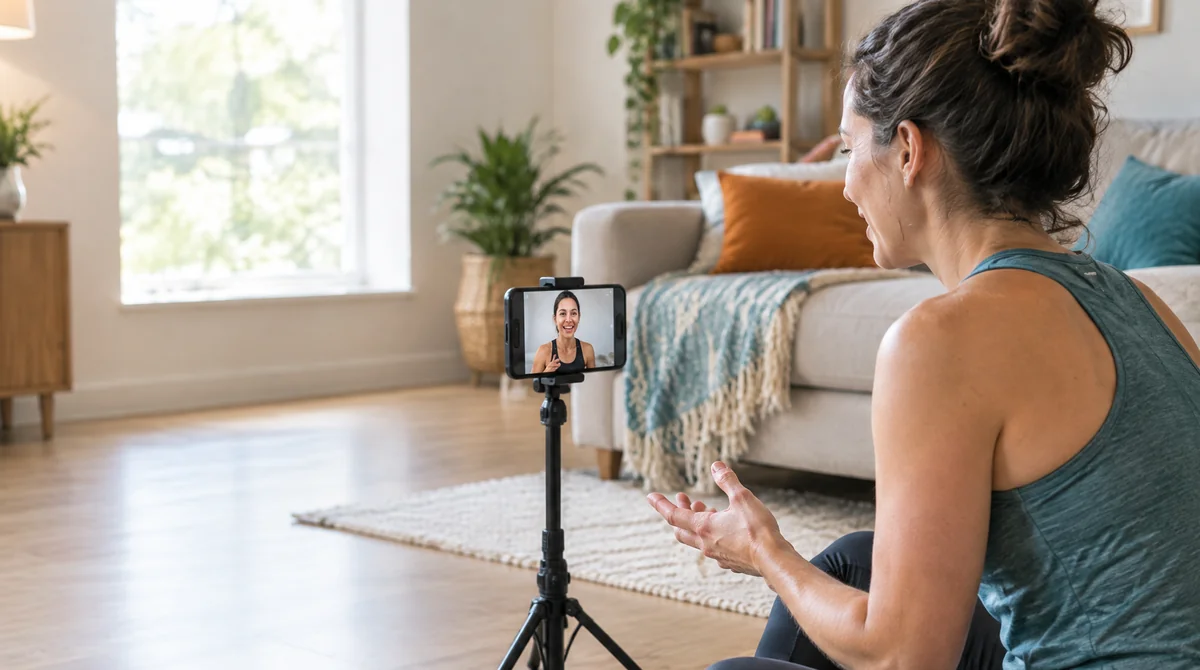
Your coach writes your program, and it lives in an app on your phone with a video demo for every exercise. You get a check-in from your coach every day, and you can message them whenever something comes up. Once a week you get on a live one-on-one video call to review how it went and update the plan. Nutrition is included, built around the food you actually eat. Nothing about it is generated automatically.
It starts at $127 a week, there is no long-term contract, and we will ask you to plan on giving it 90 days, because that is how long real change takes. You can coach with us from anywhere in the United States.
Where to start
If the seven questions above sound like the conversation you want to have, book a free coaching call. We will go over your goals, your schedule and what you have to train with, and tell you honestly whether online coaching is the right fit. Sometimes the answer is no, and we will say so.
And if you happen to be in Chicago, you have both options. Our private studio is in Lakeview, and your first session there is free. Plenty of clients use both: studio sessions as the anchor, online coaching carrying the weeks they are traveling.
Either way, the thing that decides your results is not where you train. It is whether someone is paying attention.