Chips, cookies, ice cream, candy, pizza. Everyone has a list, and everyone has had a night where that list wins.
Cravings are not a character flaw, and they are not proof that you lack discipline. Most of the time they have a practical cause. Once you know what is driving yours, you can do something about it instead of just gritting your teeth.
Why cravings happen
You are underfed, not undisciplined. Skip breakfast, eat a small salad for lunch, and by 4pm you are starving. That is not weakness. It is hunger, and hunger reaches for whatever is closest.
Your meals are light on protein and fiber. Both slow digestion and keep you full. A meal that is mostly quick carbs often leaves you looking for something else within a couple of hours.
You are tired. Short sleep tends to increase appetite and makes sugary, salty food look a lot more appealing. Some of the worst craving days start the night before.
You are stressed, bored or lonely. Food is a fast, reliable way to feel better for ten minutes. That is real, and pretending otherwise does not help anybody.
Habit and environment. If you eat chips on the couch every night at nine, then nine o’clock on the couch becomes the craving. It has nothing to do with hunger.
The food itself is built to be easy to overeat. That one deserves its own section.
What ultra-processed food has to do with it
Ultra-processed foods are made mostly from refined ingredients and additives you would not cook with at home. Think chips, candy, soda, packaged cookies and pastries, sweetened breakfast cereals and many frozen meals. They are designed to taste great, last a long time on the shelf and go down easily.
That last part matters. In a small, tightly controlled NIH study in 2019, 20 adults spent two weeks eating ultra-processed meals and two weeks eating minimally processed meals, as much as they wanted of each. The meals were matched for calories, sugar, fat, fiber and carbohydrates. On the ultra-processed diet, people ate about 500 more calories a day and gained about two pounds. On the minimally processed diet, they lost about two pounds.
It was one small study, but it matches what a lot of people notice: it is hard to stop at a handful of chips, and easy to stop at an apple.
None of this means everything that comes in a package is a problem. Canned tomatoes, canned beans and tuna, frozen fruit and vegetables, plain yogurt and pre-cut vegetables are all minimally processed and make healthy eating easier. Dried fruit like raisins is not ultra-processed either. It is fruit with the water taken out, so it packs more calories into a smaller handful than fresh fruit, which is worth knowing, but it belongs on the fruit side of the list.
Granola is a mixed bag. Many store versions are closer to dessert, but you can make a simple one at home with our healthy homemade granola recipe.
Pick foods with volume
Foods that are full of water and fiber fill you up for fewer calories. An ounce of potato chips has about 150 calories. For about the same calories, you could eat around three cups of strawberries.
Fruit, vegetables, salads, soups, Greek yogurt and cottage cheese all take up room in your stomach without a big calorie bill. Apples, carrots, cucumber, peppers, grapes, berries, watermelon and oranges make easy snacks, especially if they are washed and ready to go.
What actually helps
Eat enough earlier in the day. This is the biggest one. Build breakfast and lunch around protein and vegetables, and many evening cravings get a lot quieter. Our post on protein basics has easy sources.
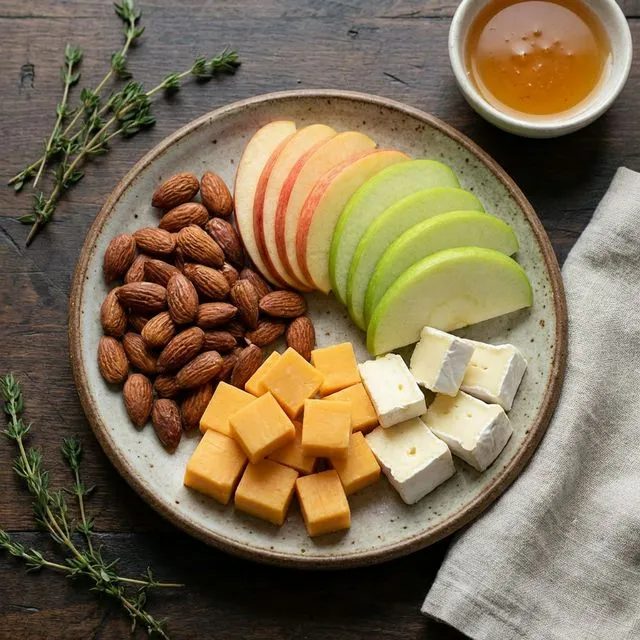
Plan an afternoon snack. If 3pm is your danger zone, beat it to the punch. Something with protein or fiber works well, like an apple with a little peanut butter, Greek yogurt or a handful of nuts.
Drink some water first. It is easy to mistake thirst or plain boredom for hunger. Have a glass, then decide.
Use the ten minute rule. When a craving hits, tell yourself you can have it in ten minutes, then go do something else. Plenty of cravings fade during the wait. If it is still there, it may be real hunger, so eat something filling.
Keep the hardest foods out of easy reach. You will win that fight more often if you are not having it at 10pm in your own kitchen. If you do keep them around, buy single portions or put them somewhere you have to go looking.
Plan treats instead of banning them. Total restriction tends to end with eating far more of the thing later. A planned dessert a few nights a week, eaten slowly and enjoyed, works better than white-knuckling it until you cave.
Give yourself something else to do. Boredom and stress cravings need a replacement, not a lecture. Go for a short walk, call somebody, or brush your teeth to signal the kitchen is closed for the night.
Look at your sleep and stress. If you are running on five hours and adrenaline, no amount of meal prep will fix the cravings. Sometimes the best snack strategy is an earlier bedtime.
Give yourself some grace
Most of us were never really taught what makes a filling snack, and the food around us is designed to be hard to put down. If cravings have been winning, that says more about your setup than about you.
Cravings never disappear completely. The goal is for them to stop being the thing that decides how your week goes. For more everyday habits that make this easier, see our post on simple changes you can make to lose weight. And if eating ever feels out of your control, it is worth talking with your doctor.
Every Transform trainer is certified in nutrition and can help you plan around cravings, and our online coaching includes a meal plan built around the food you actually like. See how our nutrition coaching works.
If you want a coach to help you build a plan around the food you actually like, take a look at our weight loss personal training.